Buy tyj.eu ?
We are moving the project
tyj.eu .
Are you interested in purchasing the domain
tyj.eu ?
domain@kv-gmbh.de · 0541-91531010
Buy tyj.eu ?
Is two-dimensional life possible?
Two-dimensional life as we typically think of it, with beings existing solely in a flat plane, is not possible based on our current understanding of physics and biology. Life as we know it requires a certain level of complexity and three-dimensional structure to function. However, it is theoretically possible to imagine simpler forms of life existing in a two-dimensional world, such as patterns or structures that can interact and evolve within a flat surface. **
What is a two-dimensional perspective?
A two-dimensional perspective refers to a way of representing objects or scenes on a flat surface, such as a piece of paper or a computer screen. This type of perspective lacks depth and only shows the length and width of objects, without representing their height or depth. It is commonly used in art, design, and graphics to create visual representations of objects and scenes. In a two-dimensional perspective, objects are typically depicted using techniques such as foreshortening, overlapping, and perspective to create the illusion of depth and distance. **

Similar search terms for Two-dimensional
Top-Angebote
Products related to Two-dimensional:
-
Angelo Metal Dimensional Wall Decor - Grandin Road"Cast dimensional rings in an abstract design . 100% cast aluminum . Impressive, 45"" width . Hand-crafted, with an antique brass finish . Keyhole mechanism; ready to hang (horizontally only) . Imported . A Grandin Road exclusive. Your happiness is..."216,75 $*Shipping: 29,95 $Secure redirect to the provider




-
Should a one-dimensional or two-dimensional array be used for world coordinates?
A two-dimensional array should be used for world coordinates. World coordinates typically involve representing points in a two-dimensional space, such as on a map or a grid. Using a two-dimensional array allows for easy representation and manipulation of these coordinates, with each element in the array representing a specific point in the world. This makes it easier to perform operations such as finding neighboring points, calculating distances, and visualizing the world space. **
-
How can a two-dimensional array be converted into a one-dimensional array?
To convert a two-dimensional array into a one-dimensional array, you can simply concatenate all the rows of the two-dimensional array into a single row. This can be done by iterating through each row of the two-dimensional array and appending its elements to the one-dimensional array. Alternatively, you can use built-in functions or methods provided by programming languages to flatten the two-dimensional array into a one-dimensional array. **
-
Is a shadow two- or three-dimensional?
A shadow is two-dimensional. It is the result of an object blocking light and creating a silhouette on a surface. A shadow does not have depth or volume, so it is considered to be two-dimensional. It only represents the outline or shape of the object that is blocking the light. **
-
Are complex numbers real two-dimensional vectors?
No, complex numbers are not real two-dimensional vectors. While complex numbers can be represented as points in a two-dimensional plane, they are not the same as two-dimensional vectors. Complex numbers have both a real and imaginary component, while two-dimensional vectors typically have both magnitude and direction. Additionally, complex numbers have their own operations and properties that are distinct from those of two-dimensional vectors. **


How do you calculate the cross product of two two-dimensional vectors?
To calculate the cross product of two two-dimensional vectors, you first need to extend the vectors into three dimensions by adding a zero as the third component. Then, you can calculate the cross product using the formula: \( \text{cross product} = (a_1b_2 - a_2b_1) \hat{k} \), where \( a_1 \) and \( a_2 \) are the components of the first vector, \( b_1 \) and \( b_2 \) are the components of the second vector, and \( \hat{k} \) is the unit vector in the z-direction. The resulting cross product will be a vector perpendicular to the plane formed by the original two vectors. **
How do you calculate the angle between two vectors in two-dimensional space?
To calculate the angle between two vectors in two-dimensional space, you can use the dot product formula. First, find the dot product of the two vectors. Then, calculate the magnitude of each vector. Next, use the formula for the dot product of two vectors: A · B = |A| * |B| * cos(theta), where theta is the angle between the two vectors. Finally, solve for theta by rearranging the formula: theta = arccos((A · B) / (|A| * |B|)). **
Top-Angebote
Products related to Two-dimensional:
-
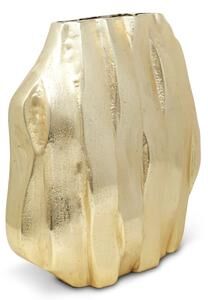
Classic Touch Gold Dimensional Vase"This majestic gold dimensional hexagon vase is the perfect statement piece for any home décor. It features a striking gold design, sure to add an elegant touch to any room. Make a statement with this beautiful vase. Measures: 11""W x 11.5""H"72,49 $*Shipping: 0,00 $Secure redirect to the provider
-
Vivience "Dimensional Crystal Vase, 5""H"Expertly crafted and designed, this crystal bud vase features a dimensional design that adds a touch of elegance to any space. Made of high-quality crystal, this vase is both beautiful and functional, perfect for displaying your favorite flowers.61,10 $*Shipping: 0,00 $Secure redirect to the provider
-
Is two-dimensional life possible?
Two-dimensional life as we typically think of it, with beings existing solely in a flat plane, is not possible based on our current understanding of physics and biology. Life as we know it requires a certain level of complexity and three-dimensional structure to function. However, it is theoretically possible to imagine simpler forms of life existing in a two-dimensional world, such as patterns or structures that can interact and evolve within a flat surface. **
-
What is a two-dimensional perspective?
A two-dimensional perspective refers to a way of representing objects or scenes on a flat surface, such as a piece of paper or a computer screen. This type of perspective lacks depth and only shows the length and width of objects, without representing their height or depth. It is commonly used in art, design, and graphics to create visual representations of objects and scenes. In a two-dimensional perspective, objects are typically depicted using techniques such as foreshortening, overlapping, and perspective to create the illusion of depth and distance. **
-
Should a one-dimensional or two-dimensional array be used for world coordinates?
A two-dimensional array should be used for world coordinates. World coordinates typically involve representing points in a two-dimensional space, such as on a map or a grid. Using a two-dimensional array allows for easy representation and manipulation of these coordinates, with each element in the array representing a specific point in the world. This makes it easier to perform operations such as finding neighboring points, calculating distances, and visualizing the world space. **
-
How can a two-dimensional array be converted into a one-dimensional array?
To convert a two-dimensional array into a one-dimensional array, you can simply concatenate all the rows of the two-dimensional array into a single row. This can be done by iterating through each row of the two-dimensional array and appending its elements to the one-dimensional array. Alternatively, you can use built-in functions or methods provided by programming languages to flatten the two-dimensional array into a one-dimensional array. **
Similar search terms for Two-dimensional
-
Angelo Metal Dimensional Wall Decor - Grandin Road"Cast dimensional rings in an abstract design . 100% cast aluminum . Impressive, 45"" width . Hand-crafted, with an antique brass finish . Keyhole mechanism; ready to hang (horizontally only) . Imported . A Grandin Road exclusive. Your happiness is..."216,75 $*Shipping: 29,95 $Secure redirect to the provider
-
DK Yoga For Kids: Simple First Steps in Yoga and Mindfulness (Mindfulness for Kids) by Susannah HoffmanSimple first steps in yoga and mindfulness for your little one to discover!Yoga for Kids is a great way to teach your children about yoga, mindfulness, meditation and peace - whilst having fun at the same time! This all-encompassing guide includes everything you need to know about yoga for children. Encourage your child's curiosity as they explore simple variations of much-loved yoga poses, from the comfort of your own home!Dive straight in to discover:-Over 25 simple poses and yoga activities to explore-How to achieve maximum mindfulness and fun throughout each activity-Colourful illustrations and photographs showing yoga poses for kids to copy-Higher-level information allows parents to understand and ensure safety behind each poseYoga for Kids aims to teach children all about yoga and mindfulness using a strongly visual approach. Featuring exercises for the parents and children to explore independently or together, whether it's stretching into tree pose, bending into butterfly pose, succeeding with sun salutation or doing downward dog, your child can explore a series of fun and engaging yoga poses that'll keep them entertained for hours! Follow the activities presented in this yoga guide, and your little one can learn how to perfect their poses and become stronger and more confident too!The ideal yoga activity book for 6-9 year olds, this is a must-have volume for children who like moving, learning and bending! Whether you're a parent looking to encourage your child to relax, engage, focus and have fun, or you think your child may be experiencing anxiety and you're looking for a fun and mindful activity the family can enjoy together, this all-encompassing yoga book for children may be calling your name!Children's yoga expert Susannah Hoffman sets out to prove that supporting a child's positive mental health does not need to be expensive, difficult or even time-consuming.With this awe-inspiring activity book, your child can explore yoga poses that will help them de-stress and have fun at the same time!4,99 £*Shipping: 1,99 £Secure redirect to the provider
-
Is a shadow two- or three-dimensional?
A shadow is two-dimensional. It is the result of an object blocking light and creating a silhouette on a surface. A shadow does not have depth or volume, so it is considered to be two-dimensional. It only represents the outline or shape of the object that is blocking the light. **
-
Are complex numbers real two-dimensional vectors?
No, complex numbers are not real two-dimensional vectors. While complex numbers can be represented as points in a two-dimensional plane, they are not the same as two-dimensional vectors. Complex numbers have both a real and imaginary component, while two-dimensional vectors typically have both magnitude and direction. Additionally, complex numbers have their own operations and properties that are distinct from those of two-dimensional vectors. **
-
How do you calculate the cross product of two two-dimensional vectors?
To calculate the cross product of two two-dimensional vectors, you first need to extend the vectors into three dimensions by adding a zero as the third component. Then, you can calculate the cross product using the formula: \( \text{cross product} = (a_1b_2 - a_2b_1) \hat{k} \), where \( a_1 \) and \( a_2 \) are the components of the first vector, \( b_1 \) and \( b_2 \) are the components of the second vector, and \( \hat{k} \) is the unit vector in the z-direction. The resulting cross product will be a vector perpendicular to the plane formed by the original two vectors. **
-
How do you calculate the angle between two vectors in two-dimensional space?
To calculate the angle between two vectors in two-dimensional space, you can use the dot product formula. First, find the dot product of the two vectors. Then, calculate the magnitude of each vector. Next, use the formula for the dot product of two vectors: A · B = |A| * |B| * cos(theta), where theta is the angle between the two vectors. Finally, solve for theta by rearranging the formula: theta = arccos((A · B) / (|A| * |B|)). **
* All prices are inclusive of VAT and, if applicable, plus shipping costs. The offer information is based on the details provided by the respective shop and is updated through automated processes. Real-time updates do not occur, so deviations can occur in individual cases. ** Note: Parts of this content were created by AI.