Buy tyj.eu ?
We are moving the project
tyj.eu .
Are you interested in purchasing the domain
tyj.eu ?
domain@kv-gmbh.de · 0541-91531010
Buy tyj.eu ?
What is the difference between strictly monotonic increasing and monotonic increasing?
Strictly monotonic increasing means that the function is always increasing and never stays the same, while monotonic increasing means that the function is always increasing or staying the same. In other words, a strictly monotonic increasing function will always have a positive slope, while a monotonic increasing function can have a zero slope at certain points. Therefore, strictly monotonic increasing functions are a subset of monotonic increasing functions. **
What is monotonic behavior?
Monotonic behavior refers to a consistent and unidirectional trend in a set of data or a mathematical function. In a monotonic increasing function, the values consistently increase as the input variable increases. Conversely, in a monotonic decreasing function, the values consistently decrease as the input variable increases. Monotonic behavior is important in various fields such as economics, engineering, and mathematics, as it helps in understanding and predicting the behavior of systems and processes. **
Similar search terms for Non-monotonic
Top-Angebote
Products related to Non-monotonic:
-
DK Yoga For Kids: Simple First Steps in Yoga and Mindfulness (Mindfulness for Kids) by Susannah HoffmanSimple first steps in yoga and mindfulness for your little one to discover!Yoga for Kids is a great way to teach your children about yoga, mindfulness, meditation and peace - whilst having fun at the same time! This all-encompassing guide includes everything you need to know about yoga for children. Encourage your child's curiosity as they explore simple variations of much-loved yoga poses, from the comfort of your own home!Dive straight in to discover:-Over 25 simple poses and yoga activities to explore-How to achieve maximum mindfulness and fun throughout each activity-Colourful illustrations and photographs showing yoga poses for kids to copy-Higher-level information allows parents to understand and ensure safety behind each poseYoga for Kids aims to teach children all about yoga and mindfulness using a strongly visual approach. Featuring exercises for the parents and children to explore independently or together, whether it's stretching into tree pose, bending into butterfly pose, succeeding with sun salutation or doing downward dog, your child can explore a series of fun and engaging yoga poses that'll keep them entertained for hours! Follow the activities presented in this yoga guide, and your little one can learn how to perfect their poses and become stronger and more confident too!The ideal yoga activity book for 6-9 year olds, this is a must-have volume for children who like moving, learning and bending! Whether you're a parent looking to encourage your child to relax, engage, focus and have fun, or you think your child may be experiencing anxiety and you're looking for a fun and mindful activity the family can enjoy together, this all-encompassing yoga book for children may be calling your name!Children's yoga expert Susannah Hoffman sets out to prove that supporting a child's positive mental health does not need to be expensive, difficult or even time-consuming.With this awe-inspiring activity book, your child can explore yoga poses that will help them de-stress and have fun at the same time!4,99 £*Shipping: 1,99 £Secure redirect to the provider
-
Orion The Telomere Effect by Elizabeth Blackburn & Elissa Epel - Paperback Health & Longevity Book - Non-Fiction Wellness GuideDiscover the secrets of healthy ageing with 'The Telomere Effect' by Elizabeth Blackburn and Elissa Epel. This groundbreaking guide, written for adult readers, reveals how everyday lifestyle choices can impact our cellular ageing and telomeres. Drawing on decades of research, the authors provide clear, actionable guidance for living a healthier, longer life. Dr Elizabeth Blackburn, a Nobel Prize-winning biologist, teams up with Dr Elissa Epel, a leading health psychologist, to distill complex biology into accessible advice. This paperback edition is a must-read for anyone interested in understanding the science behind healthy ageing and taking control of their own well-being.2,99 £*Shipping: 2,99 £Secure redirect to the provider
-
The Handy Homestead Non Slip Sports Headband For Running Yoga And Fitness aStay focused, cool, and confident through every workout. This sports headband helps keep sweat and stray hair out of your face so you can move without distraction. Designed for men and women, it features a lightweight feel with a secure silicone...34,97 $*Shipping: 0,00 $Secure redirect to the provider
-
Market Central Non Slip Sports Headband For Running Yoga And Fitness Sweat Control pinkStay focused, dry, and comfortable through every workout with this sports headband made for active days. Designed for men and women, it helps absorb sweat before it reaches your eyes while keeping hair neatly in place. The soft, stretchy fit makes...29,97 $*Shipping: 0,00 $Secure redirect to the provider



-
What is the difference between strictly monotonic decreasing/increasing and monotonic increasing/decreasing?
Strictly monotonic decreasing/increasing means that the function is either always decreasing or always increasing, without any flat regions or plateaus. Monotonic decreasing/increasing, on the other hand, allows for flat regions where the function remains constant. In other words, strictly monotonic functions do not have any horizontal sections, while monotonic functions may have horizontal sections. **
-
What is the difference between strictly monotonic increasing/decreasing and monotonic increasing/decreasing?
Strictly monotonic increasing/decreasing means that the function is either always increasing or always decreasing, without any flat regions or plateaus. Monotonic increasing/decreasing, on the other hand, allows for the possibility of flat regions or plateaus where the function remains constant. In other words, strictly monotonic functions do not have any horizontal sections, while monotonic functions may have some. **
-
Is there a timer for mindfulness training, meditation, yoga, and spirituality?
There is no set timer for mindfulness training, meditation, yoga, and spirituality as it varies from person to person. Some people may find it helpful to start with short sessions, such as 5-10 minutes, and gradually increase the duration as they become more comfortable. Others may prefer longer sessions right from the start. It's important to listen to your body and mind and find a timing that works best for you. The key is to be consistent and make it a regular practice in your daily routine. **
-
What is strictly monotonic now?
A function is strictly monotonic if it is either strictly increasing or strictly decreasing. This means that for any two points in the function's domain, the function values at those points are either strictly increasing or strictly decreasing. In other words, the function does not have any plateaus or flat regions where the function values remain constant. **

Is every convergent sequence monotonic?
No, not every convergent sequence is monotonic. A convergent sequence is one that approaches a specific limit as the number of terms in the sequence increases. A monotonic sequence, on the other hand, is one that is either always increasing or always decreasing. While some convergent sequences may be monotonic, there are also convergent sequences that oscillate or have a mix of increasing and decreasing terms as they approach their limit. Therefore, not every convergent sequence is monotonic. **
How do you indicate that a function is strictly increasing or non-monotonic in an interval i?
To indicate that a function is strictly increasing in an interval i, you would show that for any two points a and b in the interval i, where a < b, the function value at a is less than the function value at b, i.e., f(a) < f(b). This would demonstrate that the function is strictly increasing in the interval i. To indicate that a function is non-monotonic in an interval i, you would need to show that there exist points a and b in the interval i, where a < b, such that the function value at a is less than the function value at b, and also points c and d in the interval i, where c < d, such that the function value at c is greater than the function value at d, i.e., f(a) < f(b) and f(c) > f(d). This would demonstrate that the function is non-monotonic in the interval i. **
Top-Angebote
Products related to Non-monotonic:
-
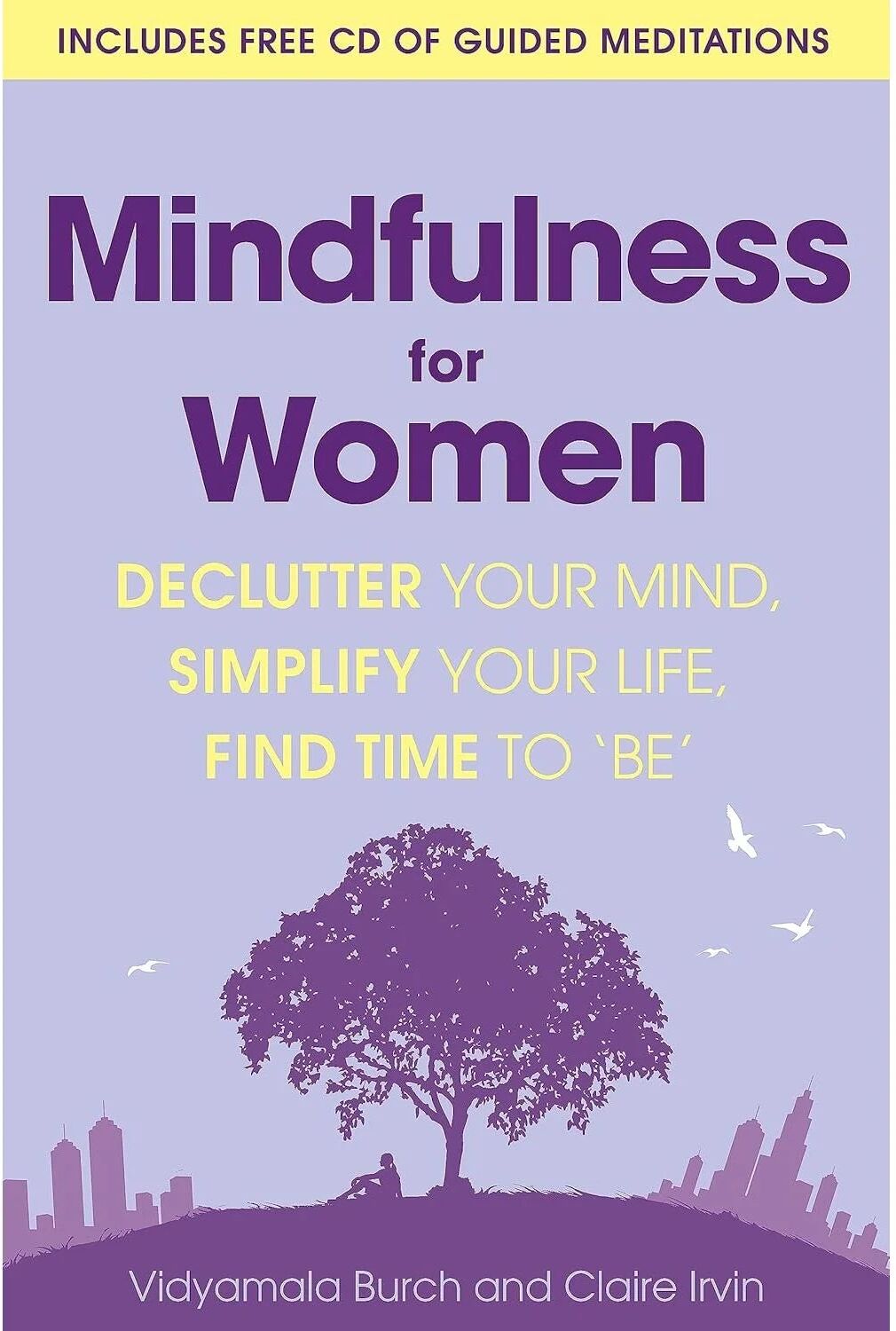
Piatkus Mindfulness for Women by Vidyamala Burch & Claire Irvin - Non Fiction Paperback - Practical Meditation & Stress Relief Guide for Busy WomenA warm and practical guide to mindfulness for women, written by Vidyamala Burch and Claire Irvin. This paperback book blends accessible meditation techniques with honest and relatable stories from two different perspectives on mindfulness. Whether you're new to meditation or looking to deepen your practice, it offers a gentle and judgement-free route towards steadiness, self-compassion and clearer thinking in everyday life. The authors, Vidyamala Burch and Claire Irvin, bring their unique experiences and insights to the book, making it a valuable resource for anyone looking to cultivate a sense of calm and well-being.15,99 £*Shipping: 2,99 £Secure redirect to the provider
-
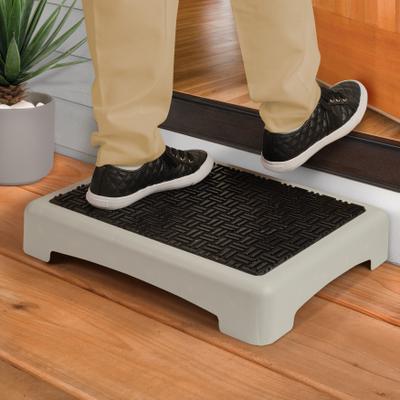
440 lbs. Weight Capacity Non-Slip Outdoor Step by North American Health+Wellness in Gray"Large platform makes it easier for those with limited ability to lift their feet and remain steady while stepping up. Comes with a slip-resistant rubber mat. Dimensions: 19 1/4""W x 15 1/2""L x 4""HPP/LDPE/TPRMax. weight: 440 lbs.Use on flat..."49,99 $*Shipping: 16,98 $Secure redirect to the provider
-
DK Yoga For Kids: Simple First Steps in Yoga and Mindfulness (Mindfulness for Kids) by Susannah HoffmanSimple first steps in yoga and mindfulness for your little one to discover!Yoga for Kids is a great way to teach your children about yoga, mindfulness, meditation and peace - whilst having fun at the same time! This all-encompassing guide includes everything you need to know about yoga for children. Encourage your child's curiosity as they explore simple variations of much-loved yoga poses, from the comfort of your own home!Dive straight in to discover:-Over 25 simple poses and yoga activities to explore-How to achieve maximum mindfulness and fun throughout each activity-Colourful illustrations and photographs showing yoga poses for kids to copy-Higher-level information allows parents to understand and ensure safety behind each poseYoga for Kids aims to teach children all about yoga and mindfulness using a strongly visual approach. Featuring exercises for the parents and children to explore independently or together, whether it's stretching into tree pose, bending into butterfly pose, succeeding with sun salutation or doing downward dog, your child can explore a series of fun and engaging yoga poses that'll keep them entertained for hours! Follow the activities presented in this yoga guide, and your little one can learn how to perfect their poses and become stronger and more confident too!The ideal yoga activity book for 6-9 year olds, this is a must-have volume for children who like moving, learning and bending! Whether you're a parent looking to encourage your child to relax, engage, focus and have fun, or you think your child may be experiencing anxiety and you're looking for a fun and mindful activity the family can enjoy together, this all-encompassing yoga book for children may be calling your name!Children's yoga expert Susannah Hoffman sets out to prove that supporting a child's positive mental health does not need to be expensive, difficult or even time-consuming.With this awe-inspiring activity book, your child can explore yoga poses that will help them de-stress and have fun at the same time!4,99 £*Shipping: 1,99 £Secure redirect to the provider
-
Orion The Telomere Effect by Elizabeth Blackburn & Elissa Epel - Paperback Health & Longevity Book - Non-Fiction Wellness GuideDiscover the secrets of healthy ageing with 'The Telomere Effect' by Elizabeth Blackburn and Elissa Epel. This groundbreaking guide, written for adult readers, reveals how everyday lifestyle choices can impact our cellular ageing and telomeres. Drawing on decades of research, the authors provide clear, actionable guidance for living a healthier, longer life. Dr Elizabeth Blackburn, a Nobel Prize-winning biologist, teams up with Dr Elissa Epel, a leading health psychologist, to distill complex biology into accessible advice. This paperback edition is a must-read for anyone interested in understanding the science behind healthy ageing and taking control of their own well-being.2,99 £*Shipping: 2,99 £Secure redirect to the provider
-
What is the difference between strictly monotonic increasing and monotonic increasing?
Strictly monotonic increasing means that the function is always increasing and never stays the same, while monotonic increasing means that the function is always increasing or staying the same. In other words, a strictly monotonic increasing function will always have a positive slope, while a monotonic increasing function can have a zero slope at certain points. Therefore, strictly monotonic increasing functions are a subset of monotonic increasing functions. **
-
What is monotonic behavior?
Monotonic behavior refers to a consistent and unidirectional trend in a set of data or a mathematical function. In a monotonic increasing function, the values consistently increase as the input variable increases. Conversely, in a monotonic decreasing function, the values consistently decrease as the input variable increases. Monotonic behavior is important in various fields such as economics, engineering, and mathematics, as it helps in understanding and predicting the behavior of systems and processes. **
-
What is the difference between strictly monotonic decreasing/increasing and monotonic increasing/decreasing?
Strictly monotonic decreasing/increasing means that the function is either always decreasing or always increasing, without any flat regions or plateaus. Monotonic decreasing/increasing, on the other hand, allows for flat regions where the function remains constant. In other words, strictly monotonic functions do not have any horizontal sections, while monotonic functions may have horizontal sections. **
-
What is the difference between strictly monotonic increasing/decreasing and monotonic increasing/decreasing?
Strictly monotonic increasing/decreasing means that the function is either always increasing or always decreasing, without any flat regions or plateaus. Monotonic increasing/decreasing, on the other hand, allows for the possibility of flat regions or plateaus where the function remains constant. In other words, strictly monotonic functions do not have any horizontal sections, while monotonic functions may have some. **
Similar search terms for Non-monotonic
-
The Handy Homestead Non Slip Sports Headband For Running Yoga And Fitness aStay focused, cool, and confident through every workout. This sports headband helps keep sweat and stray hair out of your face so you can move without distraction. Designed for men and women, it features a lightweight feel with a secure silicone...34,97 $*Shipping: 0,00 $Secure redirect to the provider
-
Market Central Non Slip Sports Headband For Running Yoga And Fitness Sweat Control pinkStay focused, dry, and comfortable through every workout with this sports headband made for active days. Designed for men and women, it helps absorb sweat before it reaches your eyes while keeping hair neatly in place. The soft, stretchy fit makes...29,97 $*Shipping: 0,00 $Secure redirect to the provider
-
The Handy Homestead Non Slip Sports Headband For Running Yoga And Fitness dStay focused, cool, and confident through every workout. This sports headband helps keep sweat and stray hair out of your face so you can move without distraction. Designed for men and women, it features a lightweight feel with a secure silicone...34,97 $*Shipping: 0,00 $Secure redirect to the provider
-
The Handy Homestead Non Slip Sports Headband For Running Yoga And Fitness bStay focused, cool, and confident through every workout. This sports headband helps keep sweat and stray hair out of your face so you can move without distraction. Designed for men and women, it features a lightweight feel with a secure silicone...34,97 $*Shipping: 0,00 $Secure redirect to the provider
-
Is there a timer for mindfulness training, meditation, yoga, and spirituality?
There is no set timer for mindfulness training, meditation, yoga, and spirituality as it varies from person to person. Some people may find it helpful to start with short sessions, such as 5-10 minutes, and gradually increase the duration as they become more comfortable. Others may prefer longer sessions right from the start. It's important to listen to your body and mind and find a timing that works best for you. The key is to be consistent and make it a regular practice in your daily routine. **
-
What is strictly monotonic now?
A function is strictly monotonic if it is either strictly increasing or strictly decreasing. This means that for any two points in the function's domain, the function values at those points are either strictly increasing or strictly decreasing. In other words, the function does not have any plateaus or flat regions where the function values remain constant. **
-
Is every convergent sequence monotonic?
No, not every convergent sequence is monotonic. A convergent sequence is one that approaches a specific limit as the number of terms in the sequence increases. A monotonic sequence, on the other hand, is one that is either always increasing or always decreasing. While some convergent sequences may be monotonic, there are also convergent sequences that oscillate or have a mix of increasing and decreasing terms as they approach their limit. Therefore, not every convergent sequence is monotonic. **
-
How do you indicate that a function is strictly increasing or non-monotonic in an interval i?
To indicate that a function is strictly increasing in an interval i, you would show that for any two points a and b in the interval i, where a < b, the function value at a is less than the function value at b, i.e., f(a) < f(b). This would demonstrate that the function is strictly increasing in the interval i. To indicate that a function is non-monotonic in an interval i, you would need to show that there exist points a and b in the interval i, where a < b, such that the function value at a is less than the function value at b, and also points c and d in the interval i, where c < d, such that the function value at c is greater than the function value at d, i.e., f(a) < f(b) and f(c) > f(d). This would demonstrate that the function is non-monotonic in the interval i. **
* All prices are inclusive of VAT and, if applicable, plus shipping costs. The offer information is based on the details provided by the respective shop and is updated through automated processes. Real-time updates do not occur, so deviations can occur in individual cases. ** Note: Parts of this content were created by AI.